Pages

Thursday, 23 December 2021

Sugar infrastructure rehabilitation program commissioned

 The Federal Government's $73 million sugar intervention fund is likely to help Dangote Sugar, BUA Sugar, and other sugar sector players.

The Central Bank of Nigeria (CBN) will distribute the $73 million (N30.7 billion) on behalf of the government to help build Nigeria's sugar industry infrastructure.

Niyi Adebayo, Minister of Industry, announced this in Abuja on Monday, 20 December 2021 during the ceremonial commissioning of the sugar infrastructure rehabilitation program.

Dangote, BUA to benefit from Central Bank of Nigeria’s N30.7bn sugar intervention fund
Dangote and Rabiu control the sugar market in NigeriaCredit: Andrew Unangst Source: Depositphotos

The programme which is themed, Presidential Intervention on Irrigation Infrastructure to Accelerate Sugar Backward Integration Programme Projects will see the development of irrigation facilities on 10,000 hectares of the sugar plantation.

The facilities will be located in six sites in Northern Nigeria, as the FG reiterated its commitment to the National Sugar Development master plan,

Adebayo said:

"The intervention involves the establishment of a $73 million irrigation intervention fund for sugar backward intervention program operators."

He further stated that:

“The purpose is to fund the development of irrigation infrastructure on 10,000 hectares of sugar plantations in Numan, Adamawa State, Sumti, Niger State, Lafiagi, Kwara State, Bacita, Kwara State, and Toto and Tunga, both in Nasarawa State."

In October Aliko Dangote had called on Nigeria to return to its sugar master plan nothing that if it is adhered to, will save Nigeria between $600 million and $700 million annually as forex.


Investors billions 'trapped' in stocks for years with no returns


Except for miracles some Nigerian investors who had committed their money buying shares of public listed Nigerian companies will never get even a one tenth of what was invested.

Some of these investors had in their young age, just like every young persons today hoped in few years time they will become free from financial challenges.

It has, however, been a sobering experience for investors. One of the companies have in-fact stopped paying dividends to shareholders as far back as 1985, despite continuing to trade on the market.

Investors hoping to make money through stocks see their billions 'trapped' since 1980s, with no penny made
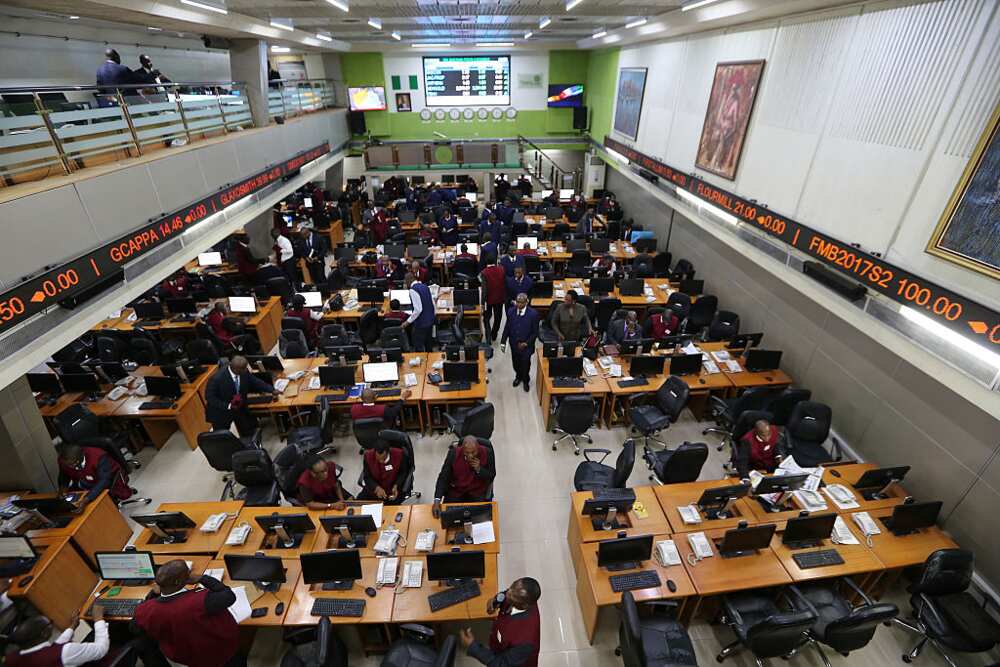
Stock brokers on the Nigerian exchange Credit: NSE Source: Getty Images

Dividends are payments a company makes to share profits with its stockholders. They're paid on a regular basis, and they are one of the ways investors earn a return from investing in stock.

51 of the 153 companies currently listed on the Nigerian exchange are culpable in terms of dividends payments to their shareholders Premium Times reports

Ten of these firms have failed to announce a dime for its investors in the last ten years.

The companies are Champion Breweries , Golden Guinea Breweries, Juli Plc, Capital Oil, DN Tyre and Rubber, Premier Paints, Livestock Feeds, Union Dicon.

Others are Daar Communications, John Holt, Studio Press, Staco, RT Briscoe, Royal Exchange Insurance, Standard Alliance, Morrisons, FTN Cocoa, Guinea Insurance, FTN Cocoa, Omatek.

Chellarams, Ellah Lakes, NCR, RT Briscoe, Tantalisers as well as Vanleer (formerly Greif) since 2012

 Dangote Cement and MTN Nigeria are the two biggest publicly listed companies in Nigeria as of October 2021.

The two firms are among the five biggest companies in the exclusive club of over N1trillion market capitalisation.

Using data from Nigeria Exchange the report showed how much each of the top firms are worth and their share price for anyone looking to invest. Source: Legit.ng

New digital token to replace NIN- FG


The federal government on Wednesday, December 22, announced its plan to introduce a digital token that would replace the current 11-digit National Identity Number, with effect from January 2022, a digital token would serve as a replacement for the NIN for all Nigerians.

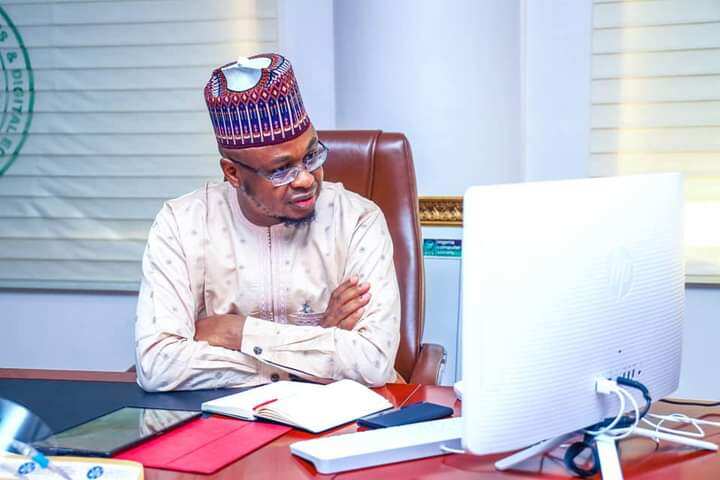
Isa Pantami
The new digitoken would be replacing the already existing NIN Photo: Dr Isa Pantami Source: Twitter

In a booklet released by the National Identity Management Commission (NIMC), the Nigerian government said it would become illegal for any company or agency to be found verifying NIN.

According to the Nigerian government, NIN verification by any agency or company would become a punishable offence.

The new digital token would comprise of 16 alphabets and numbers.

The vNIN is non-transferable and expires after 72 hours

It also reports that companies would only be allowed to store and verify virtual NIN or digitoken which is exclusively issued to an ID holder with the NIN.

The booklet read in part:

“The virtual NIN is issued by an ID holder who has onboarded the NIMC MobileID application or generated via the USSD service."
"The Digitoken is issued to a specific verification entity and may be only verified by that entity and no one else.”

The booklet also noted that parents could use their profiles to generate the virtual NIN for their children and wards who are minors on the NIMC application.

It said::

"The Digitoken issued by the ID holder (to be known as the Issuer) will now replace the raw 11-digit NIN in all databases around the country, with the exception of the National Identity Database domiciled at the NIMC.

The federal government has made commendable progress in its efforts to create a database for Nigeria.

There are about 51 million citizens who have been captured in the NIN enrollment since its inception in 2020.

In fact, the government revealed that 189 million SIMs have been registered so far.

The minister of communications and the digital economy has revealed the huge amount generated by his ministry.

According to him, the sector played a huge role in lifting the country out of recession in recent times.

Going further, the minister said that initiatives of the ministry are geared towards supporting the federal government in its 3 main focus areas- economy, security and anti-corruption.

Nigeria Uses N215.8trn to service external debts in 3 months


The Nigerian government has spent the sum of N215.8 billion on external debt servicing from September to December of 2021. This is an increase of 74.2 per cent compared to N124 billion in the second quarter of 2021, says the Debt Management Office (DMO).

Data shows that the sum of A look at the data shows that a sum of N755.3 trillion has been used to service external debts between January to September of 2021, according to a report by Nairametrics.

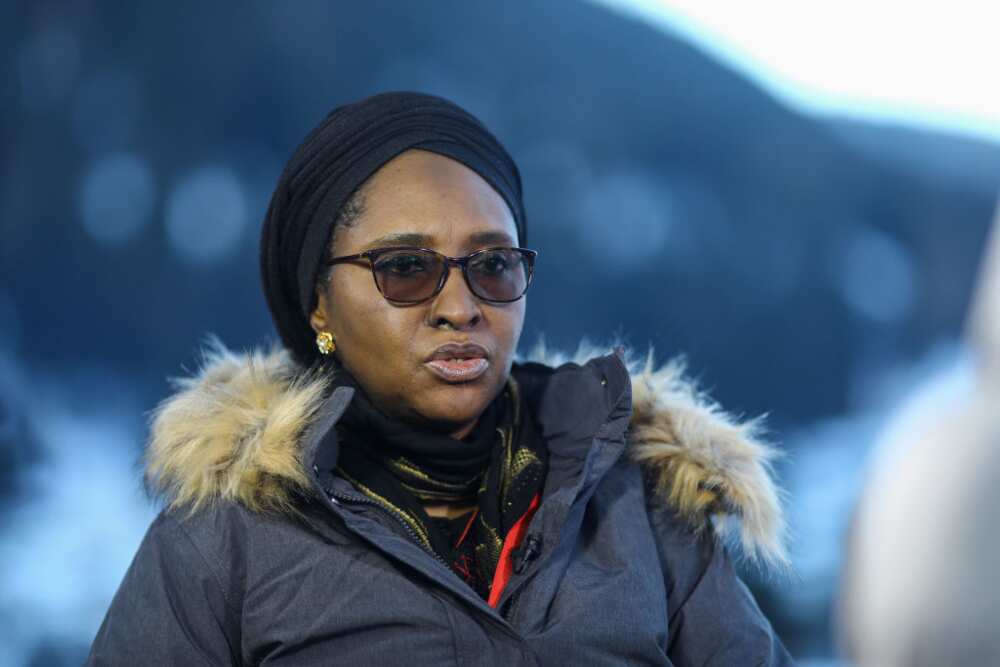
Minister of Finance, Zainab Ahmed
Zainab Ahmed, Minister of Finance Credit: Simon Dawson/Bloomberg Source: Getty Images

This represents a 3.9 per cent increase than the N527 trillion spent in the same period last year.

Domestic debt servicing increased very highly by 150.5 per cent from N322.75 billion recorded in the second quarter of 2021 to N808.49 billion in the third quarter of 2021.

This takes the year-to-date domestic debt service to N1.74 trillion from N1.53 trillion recorded in the same period of 2020.

The increase in debt service comes on the back of the significant jump in the country’s debt profile. Nigeria’s external debt rose to $37.96 billion as of Q3 2021, moving from $33.47 billion recorded in the previous quarter.

The 4 billion Eurobond raised from the international debt market to shore up Nigeria’s external reserve market drove the increase above N16.6 trillion.

Nigeria raised the sum of N1.6 trillion in Eurobond in September, a capital increase that was called one of the biggest financial trades in Africa after the order book plateaued at N415 trillion, which allowed the Nigerian government to raise an additional N5 trillion more than the intended N1.2 trillion.

On the other hand, domestic debts also recorded an uptick as federal government domestic debt stock rose to N18.4 trillion, while state domestic debts increased to N4.2 trillion

The Debt Management Office said that Nigeria’s public debt has hit N38.005 trillion at the end of Q3.

The debts include both external and domestic of the federal government, the 36 state governments and the FCT, Abuja.

The debt represents a spike of N2.54 trillion within three months compared to the N35.46 trillion recorded in the same period at the end of June of 2021.

Wednesday, 22 December 2021

FG declares Monday, Tuesday Christmas public holidays

 To celebrate Xmas and the New Year the federal government has declared Monday, December 27th, Tuesday, December 28th and Monday, January 3rd 2022 as public holidays to mark Christmas, Boxing Day and New Year’s Day celebrations in the country. 

The minister of interior, Rauf Aregbesola, made the declaration on behalf of the federal government.

This announcement was contained in a statement on Wednesday, December 22, signed by the permanent secretary of the Ministry of Interior, Shuaib Belgore.

Breaking: FG announces date for Christmas Public Holidays
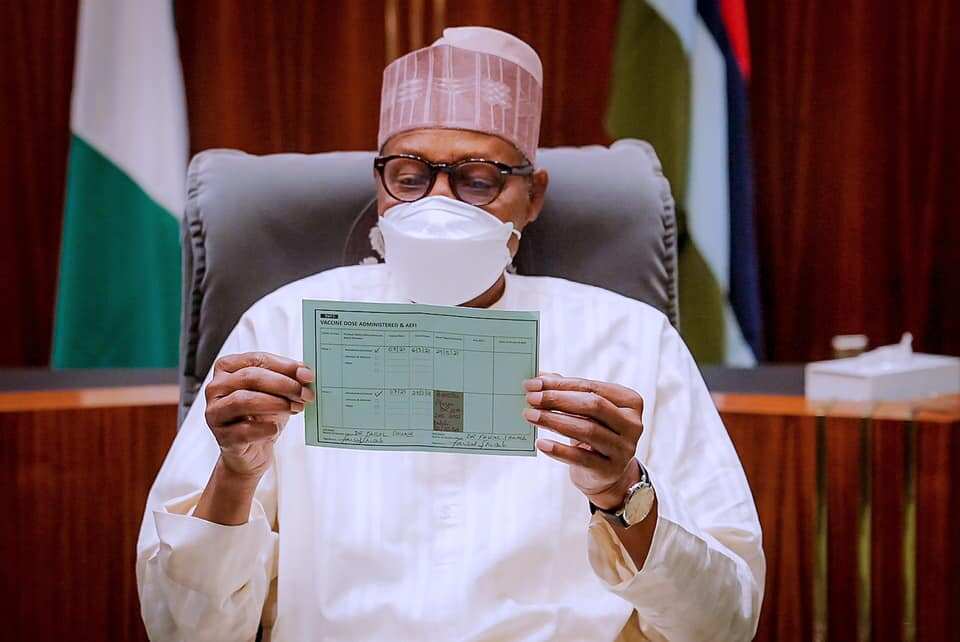
President Muhammadu Buhari took the first dose of COVID-19 vaccine on March 6, 2021, and his second dose on May 29, 2021. Photo credit: Muhammadu Buhari Source: Facebook

It was titled, FG declares Monday, 27th, Tuesday 28th, 2021 and Monday, January 3rd, 2022 public holidays.

The minister was quoted as saying:

“We must emulate the life of Jesus Christ in His practice and teachings on Humility, Service, Compassion, Patience, Peace and Righteousness, that His birth signifies.
“This will be the best way to portray Christ and celebrate his birth.”

He urged Christians and Nigerians to make the best use of this festive period to pray for the total eradication of insecurity bedevilling the nation.

Aregbesola also enjoined all Nigerians to adhere strictly to and observe all the stipulated non-pharmaceutical COVID-19 protocols and guidelines.

Meanwhile, it looks already like a bleak Christmas with the rising cost of goods in most markets across the country. 

Thursday, 16 December 2021

FG partners WHO on electronic waste exposure on child, public health


The Federal Ministry of Health has partnered with the World Health Organisation to strengthen stakeholders’ capacity to halt impact of electronic waste exposure on child and public health in Nigeria.
This was the thrust of the ongoing National Stakeholders’ Workshop on Prevention of Impact of Electronic Waste on Child Health in Abuja.
The Minister, Dr Osagie Ehanire, called for more political commitment from stakeholders towards reversing this trend, saying the country had enough laws and policies to curb the negative impact of electronic waste management.
Ehanire, represented by Dr Shuaibu Bonji, Director, Climate Change and Environmental Health, said discarded and obsolete electronic equipment was becoming a worldwide problem.
“Disposing E-waste safely and securely was important for everyone, the issue of E-waste across the world today including Nigeria, electronic and electrical device have become indispensable in our daily lives.
“The dangers posed by improper disposal of E-waste on the environment ultimately have impacts on human beings, the health effects of these toxins on human includes; birth defects which are irreversible.
“The brain, heart, kidney and other sensory organs can also be damaged, there is an urgent need for all stakeholders to take prompt actions,’’ he said.
He added that the ministry was optimistic that recommendations from the meeting would serve as a veritable tool for advocacy towards changing the narrative of poor e-waste management.
Dr Edwin Isotu-Edeh, National Consultant, Public Health and Environment, representing WHO Nigeria Country Representative, said the meeting would raise awareness on the magnitude of e-waste exposure to human and health.
According to him, this will set the country on a path to have a roadmap on data collection on e-waste sites in the three pilot states of Kano, Lagos and Rivers.
“This will show the low awareness and unpleasant practices.
“All of these data will assess the readiness of the health system to respond to the issue of e-waste as it affects public and child health.
“It will also know what exposures to toxins and chemical affects the nation.
“The television you use in your house, mobile phones have some dangerous chemical in them, when you throw them in the dustbin and it is not properly managed.
“Some people go to pick them up, remove somethings out of them.
“Those dangerous chemicals may damage peoples’ health, affect their lungs, organs, and make it difficult for children to have good memory, affect the immune system of everyone on that chain.
“The unused battery that people remove from their cars should not be disposed indiscriminately, they should be properly managed, and now is the time to take the actions,’’ he said.
Dr Livinus Nwankwo, representative of the Ministry of Environment, said electrical and electronic waste was massive in Nigeria, saying its impact was grave to public health and wellbeing of children, as they were the most vulnerable.
“The Federal Executive Council had approved restricted importation of e-waste into the country, as we speak, we have trained Nigeria Customs Service on how to identify e-waste at our entry points.
“We have partnered with so many organisations to curb the effect and impact of e-waste into the country.
“Although we allow importation of some used electronic wastes in order to bridge the digital gap, if the policy come into place, I know that will curb the inflow of used items.
“When we do this, the age limit of these equipment will be placed so that those who do not make it are not imported into the country’’.
He expressed hope that the stakeholders’ collaboration would go a long way to address the menace.
Dr Baba Mohammed, Registrar, Environmental Health Registration Council of Nigeria (EHORECON), expressed optimism that the workshop was an avenue to mitigate the impact of climate change in the country.
He said the proposed Environmental Health Management Information System would also be a platform for effective collection and management of data to assess and proffer solutions to e-waste in Nigeria.
“The Environmental Health Management Information System will be a system where all environmental parameters will be reported from grassroots to the Federal, this template would also be done in collaboration with WHO,’’he said. (NAN)

Congestion: Lagos seeks collaboration on waterways transportation


Lagos State Government is seeking for Public and Private collaboration to foster growth and investment in the waterways transportation in order to reduce traffic congestion in the state.

Gov. Babajide Sanwo-Olu of Lagos state disclosed this during the Lagos Waterways Investment Summit organised by the Lagos State Waterways Authority (LASWA) in Lagos.

The summit was the maiden edition put together by Future Cities Nigeria (FCN) and LASWA, with a theme. “Lagos State Transportation: Transformation and Investment Opportunities”.

Sanwo-Olu said that areas of investment required by the private sector included the provision of water transportation (passengers, car and cargo), construction of infrastructure and management, technical partnership and consultancy, financing and provision of logistics.

He said that the state covers 1,171 square kilometres of Nigeria’s land mass, 40 per cent is water, with lagoons and creeks covering 22 per cent.

Sanwo-Olu who was represented by Mr Ope George, the Special Adviser, Office of Public-Private Partnership, said that successful partnership with the private sector in waterways would bring positive change to the state’s  socio-economic status.

The governor noted that the state government had made some interventions in the waterways sector, which would further boost the enabling environment for the private sector.

According to him, that the Lagos State Ferry Service (LAGFERRY) ferried members of the national soccer team, the Super Eagles, to Porto Novo on March 26, bears a bold testimony to this vast potential.

He noted that the state is the most populous and the engine-room of its business and commercial activities, housing headquarters of many giants in the financial and industrial sectors.

The Special Adviser on Sustainable Development Goals (SDGs) and Investments to Sanwo-Olu, Mrs Solape Hammond, said the state promised to identify and promote genuine and specific foreign direct investment on waterways in the state.

Hammond said the state would always serve as a ‘business ombudsman’ that helps investors and the local business community navigate government bureaucracy.

She noted that the state would also act as a one-stop shop for investors intending to invest in Lagos State, thereby promoting private, civil and development sector partnership.

Hammond said it was an incontrovertible fact that Lagos derived its age-long excellence in significant measure from the worthy contribution of the private investment to its socio-economic development.

“We assure our potential investors that your investments are safe-Fitch international just improved our rating from AA+ to AAA long term for fiscal red pins,’’ she said.

The General Manager, LASWA, Mr Damilola Emmanuel, highlighting the achievement of the state government in the waterways, said it had access 15 of the 20 local governments in the waterways.

Emmanuel said the purpose of the investment opportunities in the waterways was to provide an alternative public transportation service that was accessible and affordable to all sections of the state.

He said: “The investment opportunities will therefore compliment the efforts of the present government to combat traffic congestion on the Lagos roads.

“It will also reduce the amount of time it takes for citizens to commute especially during the peak period.

“In addition, this will also assist in poverty alleviation through increased economic activities from the provision of safe, cheap and reliable transportation,’’ he said.

Emmanuel said LASWA had adopted a ferry operators licensing framework, prioritised route had been approved and it also had a route licensing template for private investors to thrive in the waterways transport sector.

The Managing Director, National Island Waterways Authority, Mr George Moghalu, urged the state government to collaborate with the Federal Government on waterways development in the state.

Moghalu said that the partnership should be in the area of safety, sensitisation campaign for boat operators and security of waterways users.

He said the state government should also partner with NIWA in the area that would not lead to multiple taxations on the part of boat operators.

The managing director said NIWA’s doors was opened to collaborate and partner with key stakeholders to ensure that the waterways are attractive to investors and users in the state.

The Chairman House Committee on Transportation Temitope Adewale, British Deputy High Commissioner in Lagos Ben Llewellyn-Jones, Future Cities Nigeria (FCN) and Team Lead Kayode Khalidson were present at the event as well as representatives from the Netherlands and French embassies.(NAN)

 

Wednesday, 15 December 2021

Yuletide: FRSC RS 5 holds retreat on safer, crash free roads


FRSC


The Federal Road Safety Corps (FRSC), Zone RS 5, has assured of safer and crash free celebrations in the zone during the Christmas and New Year celebrations.

The theme of the retreat is “Brainstorming for Safer Roads, Fuller Lives”. The Zone Rs 5 comprises Edo, Delta and Anambra states.

Mr Ayodele Kumapayi, Zonal Commanding Officer (ZCO) in charge of the zone, gave the assurance on Wednesday at Owa Aleiro, Delta, during a one-day Special Retreat for Commanding Officers and Heads of Operations in the zone.

Kumapayi said that participants from the zone gathered to brainstorm on how to improve on performances from previous years in line with orders from the corps headquarters.

He said it was also to know how best to have a seamless end of year special patrol and operation zero tolerance.

He said that the corps would deploy body cameras in the zone for operation zero tolerance as a major traffic corridor in the country.

“We will try as much as possible to minimize crashes with FRSC personnel on the roads across the zone. We will also be fast in clearing any obstruction on the roads,” he said.

Kumapayi called on the participants to be committed in ensuring that the 2021 operation zero tolerance was the best, devoid of crashes and lock jam.

In their remarks, the sector commanders for the zone pledged their preparedness for a free traffic in their various states.

Mr Henry Benamaisia, Edo Sector Commander, said the command would be deploying not less than 1,300 personnel for the special operations during the Yuletide.

Represented by Mr Nasir Mohammed, Sector Head of Operations, Benamaisia said the figure included both the regular and special marshals.

He said that two taskforces would be working closely with the command to clear obstruction within the state and in market places.

Mr Adeoye Irelewuyi, Anambra Sector Commander, said that help areas had been mapped out by the command for early intervention during crashes.

He said the command would increase working hours, especially during the night, with special focus on the head bridges to prevent lock jam.

Mr Fatai Bakare, Head of Operations, Delta command said that the command would carry stakeholders along for free flow of traffic as well as deploy operational vehicles across the state to ensure success.

Papers presented includes, “the best approach to enhance a fruitful synergy with stakeholders” and “How to make 2021 Operations Zero Tolerance a Memorable One” aside others. (NAN)