Pages

Saturday, 10 September 2022

Abacha loot: $4bn in cash returned to Nigeria from 1999 to 2022 - Report


General Sani Abacha, a former military Nigerian leader, stole a massive amount of funds from the coffers of the public treasury, and to date, foreign governments are still in the business of returning to the country monies looted by him.

So far, an estimated $4 billion in cash and $2 billion in assets have been recovered from the Abacha loot from 1999 to 2022.

The most recent development is the $23 million the United States government has agreed to repatriate to Nigeria after signing a deal with the Buhari-led federal government.

Abacha
Gen  Abacha  (Photo: @G_sparking) Source: Twitter

Although it is yet unknown how much exactly was smuggled abroad during the Abacha regime, below is times his loot has been recovered by Nigeria.

. July 1999 ($420 million) May 2002 ($1.2 billion) November 2003 (Jersey Island recovered $149 million) 

September 2005, Switzerland returned $458 million in cash and $2 billion in assets 

March 2014 (Switzerland returned $380 million) June 2014 (Liechtenstein returned $227 million) August 2014 (the US returned $480 million) 

2016 (Switzerland returned $723 million) December 2017, Switzerland returned $322 million more of Abacha loot to the Nigerian government. 

May 2019, £211 million Abacha loot was discovered in a bank in Jersey, the United States of America.

 January 2020 (Island of Jersey and the US returned $321 million) May 2020 (Island of Jersey and the US returned $311,797,866.11) 

August 2020, (Republic of Ireland repatriated €5.5 million) August 2022, the US repatriated $23 million.


Build teachers capacity on family life – UNESCO urges FG


Participants at the UNESCO workshop
Participants at the workshop

The United Nations Educational, Scientific and Cultural Organisation has urged the Federal Government to sustain the training of teachers on Family Life HIV Education (FLHE) in order to address Gender Based Violence.

The National Programme Officer on Education, UNESCO, Ms Ngozi Amanze, made the call in an interview with the News Agency of Nigeria (NAN) in Abuja on Friday.

Amanze, who spoke after a four-day workshop to develop the FLHE Lesson Plans said that sustaining the training would also address early pregnancy and ensure a well-informed society.

The initiative is under UNESCO’s Our Rights, Our lives, Our Future (O3 Programme), an adolescent and young people’s education for health and wellbeing project.

”Some of these life changing projects, when there are no enough funds to drive them becomes moribund, so, we are calling on the government to ensure its sustainability.

”They have taken a very good move to incorporate it in the school curriculum, but teachers need to be trained as they are the major capacity implementor; they are key to ensuring a successful FLHE,” she said.

The programme officer said that 50 teachers and representatives of various Ministries Department and Agencies as well as non-governmental organisations participated in the workshop.

According to her, the workshop is aimed at building the capacity of participants with vital and appropriate information on FLHE topics and how to deliver them to the students.

She added that the training would also aide in eroding myths and misconceptions on FLHE.

“Part of what we do is to build the capacity of parents, teachers, guardians and relevant stakeholders to understand what FLHE is all about.

“And support the children to have informed knowledge on accurate information, informed decision that can make them to be able to deal with life choices and the consequences of what they do to them and people around them.” she said.

Malam Taller Danbazau, Assistant Director, Education Support Service, Federal Ministry of Education advised the participants to share knowledge learnt at the training with colleagues and students.

Danbazau, commended UNESCO for its support, reiterating the commitment of the government toward improving education standard in the country.

Also Mrs Viko Martina, Chief Education Officer, National Teachers Institute (NTI) said the FLHE programme would empower participants with appropriate skills.

“I urge the participants to step down this training to the grassroots, because there are lots of misconceptions by families and communities on FLHE.

“Because it is mainstreamed into the curriculum, at the end of this workshop, we will have a document that will be usable and impactful to the students,” she said.

Also, Mrs Mabel Babatomi, Senior Education Officer, Teacher’s Development, Universal Basic Education Commission also called on participants to share knowledge gained from the training with others.

One of the participants, Ms Grace Mba, a teacher from Abia said that the workshop had empowered her with knowledge on delivering accurate information, age and context appropriateness on FLHE.

Mba said that the training would help teachers to translate the curriculum into learning activities and equip students with the skill and competencies to make informed decisions. Source,:(NAN)

Thursday, 8 September 2022

Obituary: Queen Elizabeth II


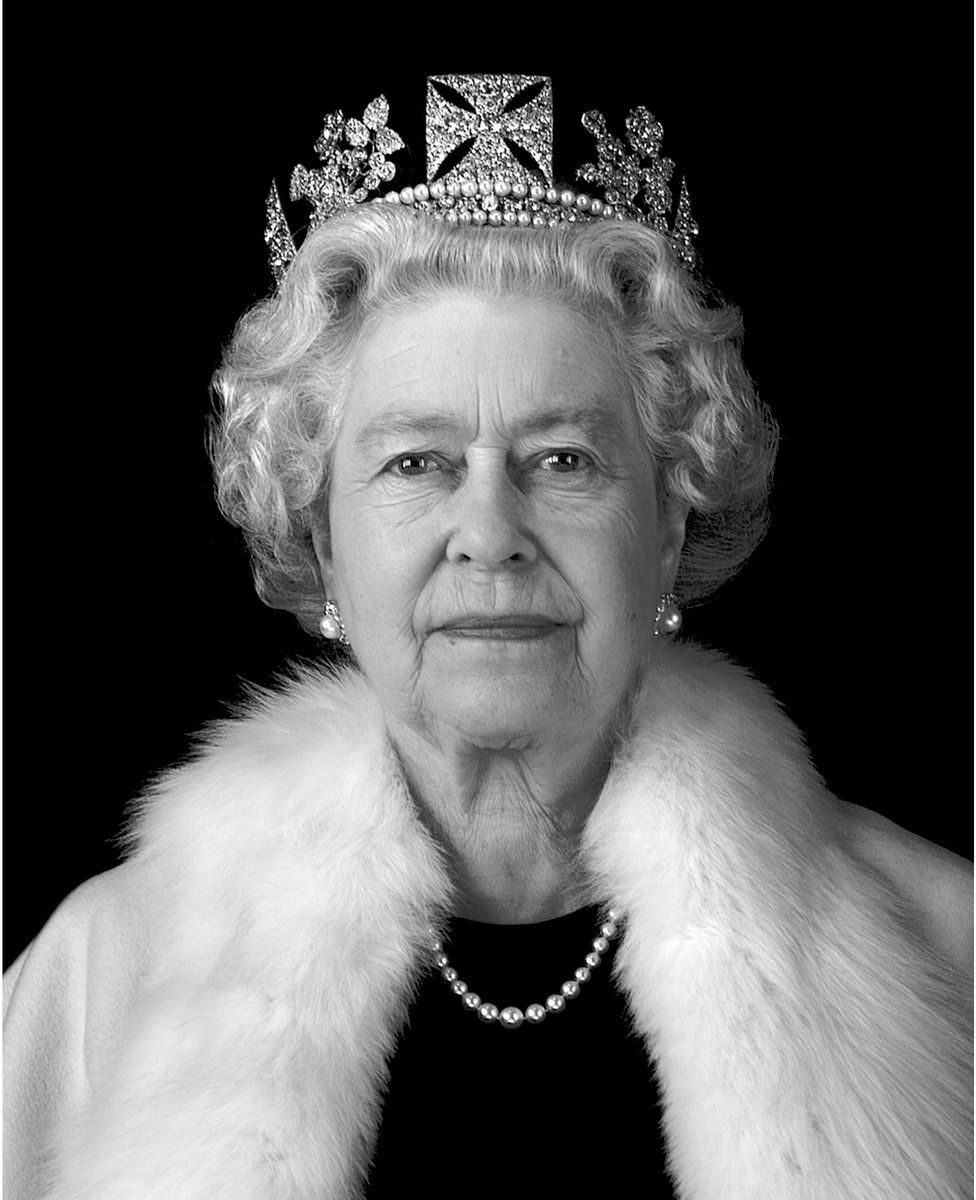
Equanimity / Queen Elizabeth II by Chris Levine (artist), Rob Munday (holographer) © Jersey Heritage Trust 2004
IMAGE SOURCE, CHRIS LEVINE/ JERSEY HERITAGE TRUST

The long reign of Queen Elizabeth II was marked by her strong sense of duty and her determination to dedicate her life to her throne and to her people.

She became for many the one constant point in a rapidly changing world as British influence declined, society changed beyond recognition and the role of the monarchy itself came into question.

Her success in maintaining the monarchy through such turbulent times was even more remarkable given that, at the time of her birth, no-one could have foreseen that the throne would be her destiny.

Elizabeth Alexandra Mary Windsor was born on 21 April 1926, in a house just off Berkeley Square in London, the first child of Albert, Duke of York, second son of George V, and his duchess, the former Lady Elizabeth Bowes-Lyon.

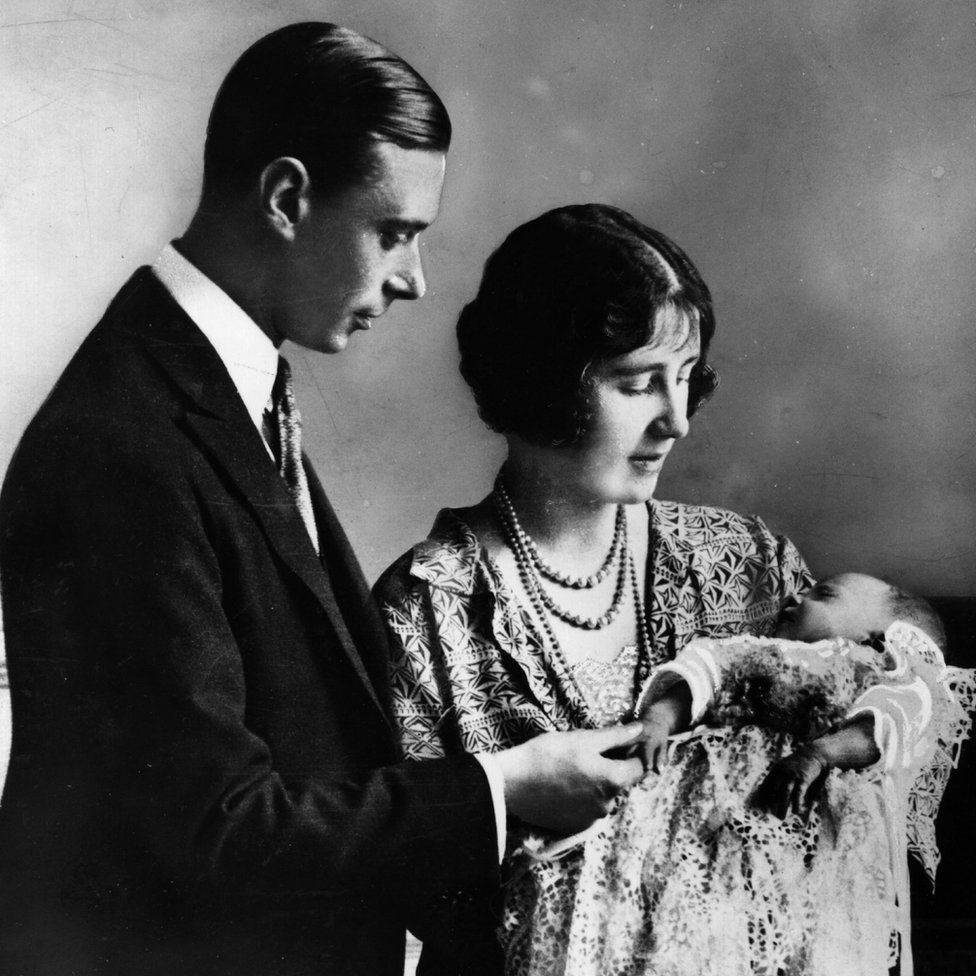
Princess Elizabeth at her christening ceremony with her parents
Image caption, Baby Elizabeth with her parents at her christening
1px transparent line

Both Elizabeth and her sister, Margaret Rose, who was born in 1930, were educated at home and brought up in a loving family atmosphere. Elizabeth was extremely close to both her father and her grandfather, George V.

At the age of six, Elizabeth told her riding instructor that she wanted to become a "country lady with lots of horses and dogs".

She was said to have shown a remarkable sense of responsibility from a very early age. Winston Churchill, the future prime minister, was quoted as saying that she possessed "an air of authority that was astonishing in an infant".

Despite not attending school, Elizabeth proved adept at languages and made a detailed study of constitutional history.

A special Girl Guides company, the 1st Buckingham Palace, was formed so that she could socialise with girls of her own age.

On the death of George V in 1936, his eldest son, known as David, became Edward VIII.

However, his choice of wife, the twice-divorced American Wallisthe twice-divorced American Wallis Simpson, was deemed to be unacceptable on political and religious grounds. At the end of the year he abdicated.

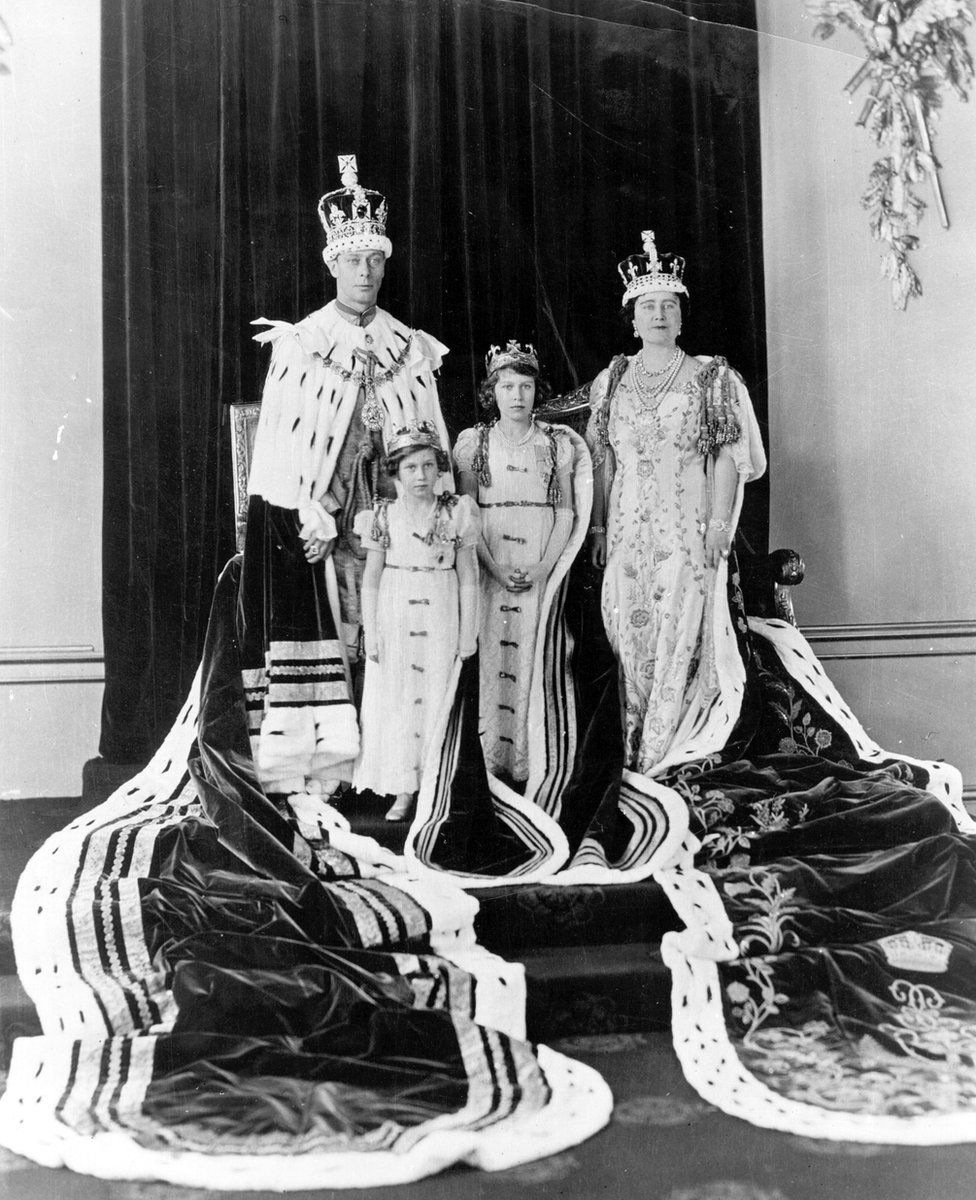
The newly crowned King George VI & Queen Elizabeth with Princesses Elizabeth & Margaret
Image caption, Princess Elizabeth, with her parents and younger sister Margaret, at the time of her father's "very, very wonderful" Coronation
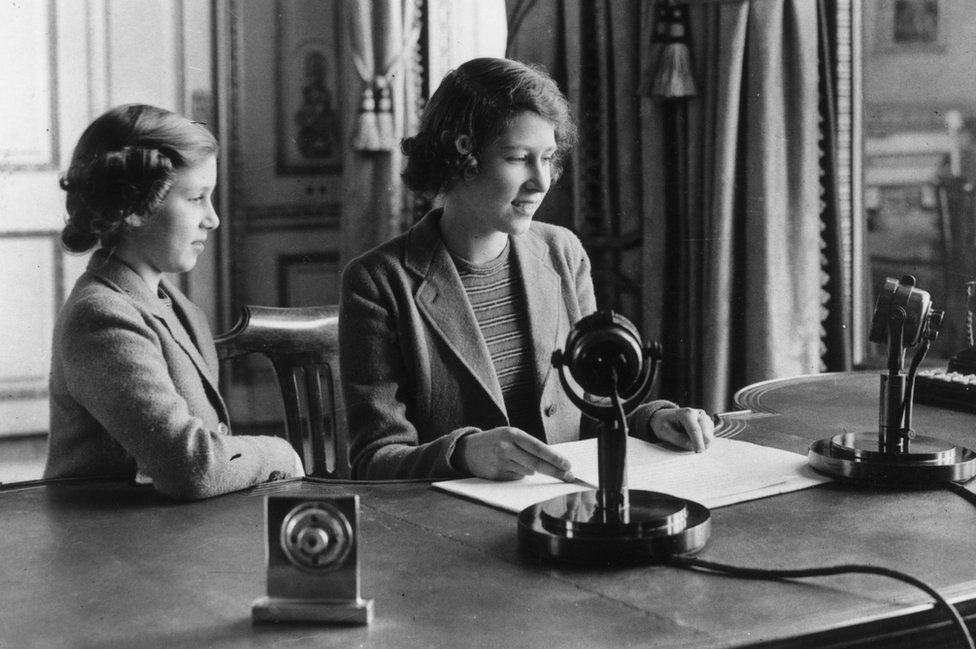
Princess Elizabeth makes her first broadcast, accompanied by her younger sister Princess Margaret Rose 12 October 1940 in London
Image caption, Princesses Elizabeth (right) and Margaret broadcast to the nation in World War Two
1px transparent line

A reluctant Duke of York became King George VI. His Coronation gave Elizabeth a foretaste of what lay in store for her and she later wrote that she had found the service "very, very wonderful".

Against a background of increasing tension in Europe, the new King, together with his wife, Queen Elizabeth, set out to restore public faith in the monarchy. Their example was not lost on their elder daughter.

In 1939, the 13-year-old princess accompanied the King and Queen to the Royal Naval College at Dartmouth.

Together with her sister Margaret, she was escorted by one of the cadets, her third cousin, Prince Philip of Greece.

It was not the first time they had met, but it was the first time she took an interest in him.

Prince Philip called on his royal relatives when on leave from the navy, and by 1944, when she was 18, Elizabeth was clearly in love with him. She kept his picture in her room and they exchanged letters.

The young princess briefly joined the Auxiliary Territorial Service (ATS) towards the end of the war, learning to drive and service a lorry. On VE Day, she joined the Royal Family at Buckingham Palace as thousands gathered in The Mall to celebrate the end of the war in Europe. "We asked my parents if we could go out and see for ourselves," she later recalled. "I remember we were terrified of being recognised. I remember lines of unknown people linking arms and walking down Whitehall, all of us just swept along on a tide of happiness and relief."

After the war, her desire to marry Prince Philip faced a number of obstacles.

The King was reluctant to lose a daughter on whom he doted, and Philip had to overcome the prejudice of an establishment that could not accept his foreign ancestry.

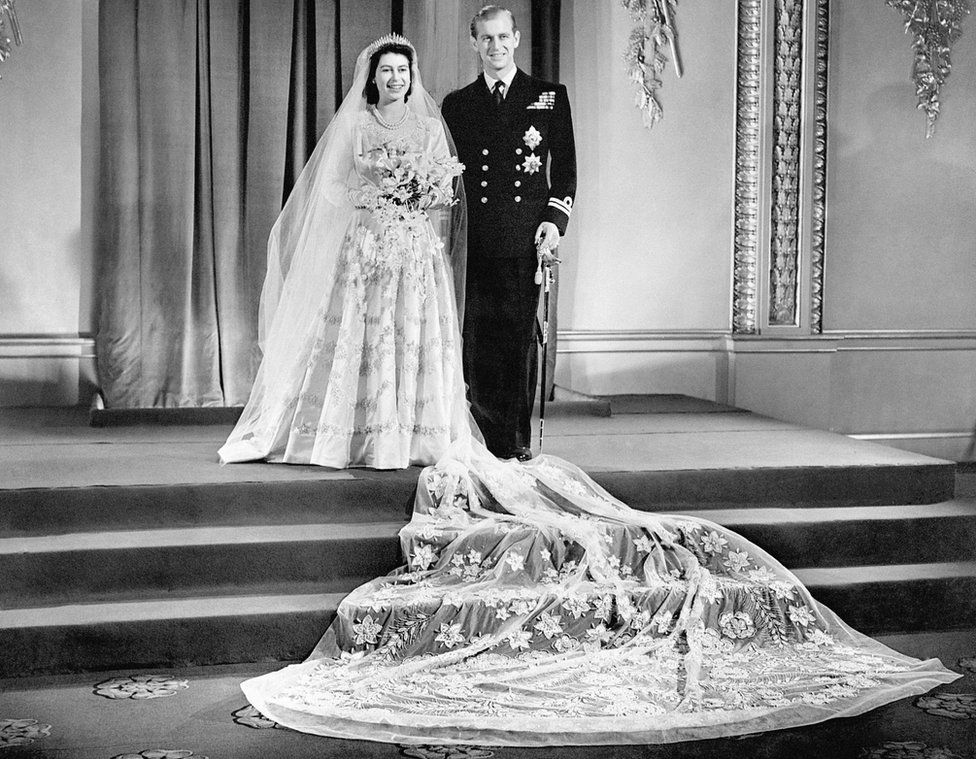
Princess Elizabeth marries Philip Mountbatten
Image caption, Princess Elizabeth's wedding to Philip Mountbatten brightened the post-war gloom
1px transparent line

But the wishes of the couple prevailed and on 20 November 1947 the couple married in Westminster Abbey.

The Duke of Edinburgh, as Philip had become, remained a serving naval officer. For a short time, a posting to Malta meant the young couple could enjoy a relatively normal life.

Their first child, Charles, was born in 1948, followed by a sister, Anne, who arrived in 1950.

But the King, having suffered considerable stress during the war years, was terminally ill with lung cancer, brought about by a lifetime of heavy smoking.

In January 1952, Elizabeth, then 25, set off with Philip for an overseas tour. The King, against medical advice, went to the airport to see the couple off. It was to be the last time Elizabeth would see her father.

Elizabeth heard of the death of the King while staying at a game lodge in Kenya and the new Queen immediately returned to London.

"In a way, I didn't have an apprenticeship," she later recalled. "My father died much too young, so it was all a very sudden kind of taking on and making the best job you can."

Personal attack

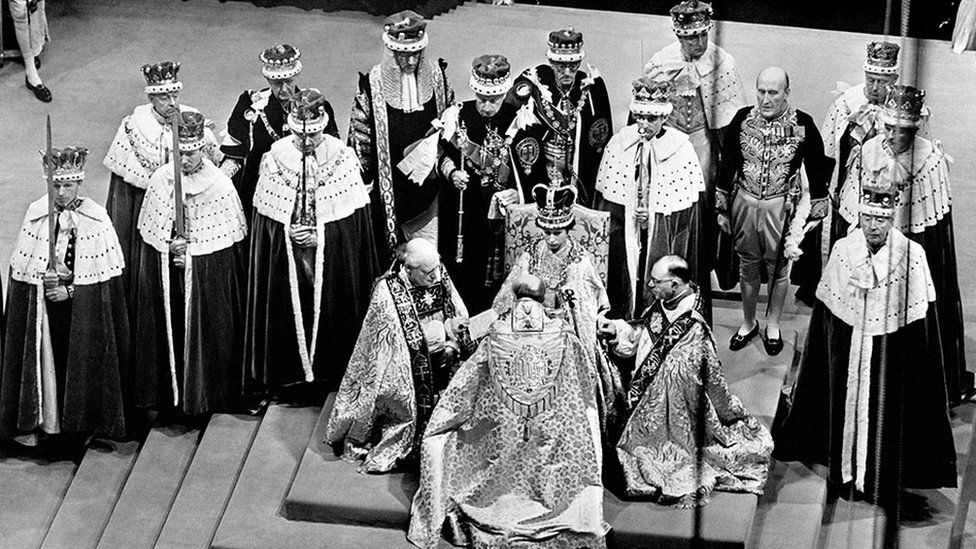
Her Coronation in June 1953 was televised, despite the opposition of Prime Minister Winston Churchill, and millions gathered around TV sets, many of them for the first time, to watch as Queen Elizabeth II made her oath.

With Britain still enduring post-war austerity, commentators saw the Coronation as the dawn of a new Elizabethan age.

World War Two had served to hasten the end of the British Empire, and by the time the new Queen set off on a lengthy tour of the Commonwealth in November 1953, many former British possessions, including India, had gained independence.

The Queen at her Coronation in 1953
Image caption, Her Coronation was the first to be broadcast live on British TV 

Elizabeth became the first reigning monarch to visit Australia and New Zealand. It was estimated that three-quarters of Australians turned out to see her in person.

Throughout the 1950s, more countries hauled down the union flag and the former colonies and dominions now came together as a voluntary family of nations.

Many politicians felt that the new Commonwealth could become a counter to the newly emerging European Economic Community and, to some extent, British policy turned away from the Continent.

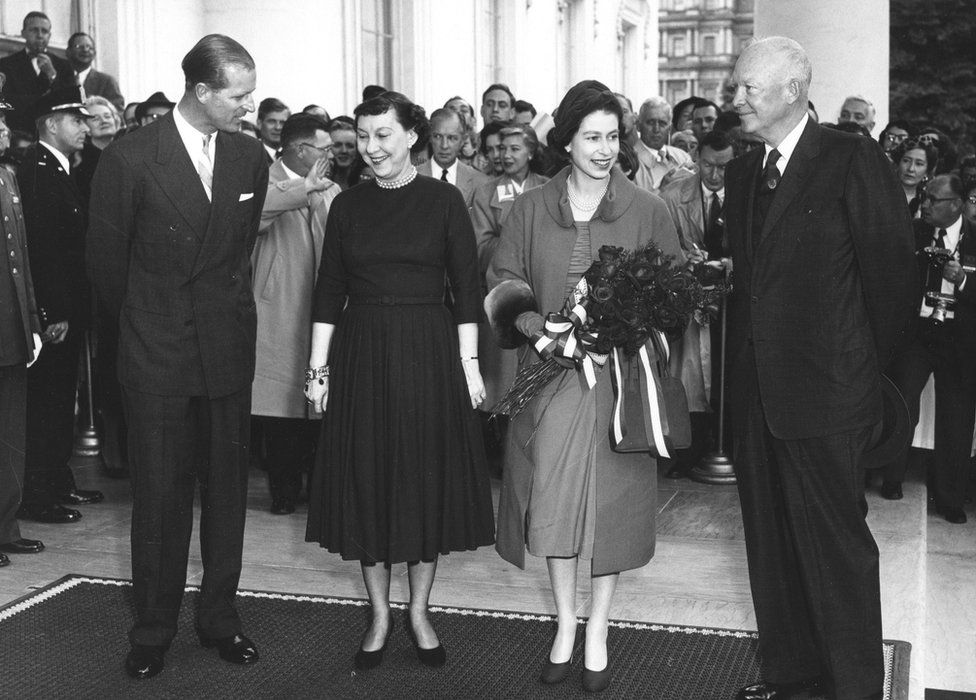
The Queen with Prince Phillip and President & Mrs Eisenhower in 1957
Image caption, Her visit to the US in 1957 was just one of many overseas tours
1px transparent line

But the decline of British influence was hastened by the Suez debacle in 1956, when it became clear that the Commonwealth lacked the collective will to act together in times of crisis. The decision to send British troops to try to prevent Egypt's threatened nationalisation of the Suez Canal ended in an ignominious withdrawal and brought about the resignation of Prime Minister Anthony Eden.

This embroiled the Queen in a political crisis. The Conservative Party had no mechanism for electing a new leader and, after a series of consultations, the Queen invited Harold Macmillan to form a new government.

The Queen also found herself the subject of a personal attack by the writer Lord Altrincham. In a magazine article, he claimed her court was "too British" and "upper-class" and accused her of being unable to make a simple speech without a written text.

His remarks caused a furore in the press and Lord Altrincham was physically attacked in the street by a member of the League of Empire Loyalists.

Nevertheless, the incident demonstrated that British society and attitudes to the monarchy were changing fast and old certainties were being questioned.

Encouraged by her husband, notoriously impatient with the court's stuffiness, the Queen began to adapt to the new order.

The practice of receiving debutantes at court was abolished and the term "the Monarchy" was gradually replaced by "the Royal Family".The Queen was once more at the centre of a political row when in 1963, Harold Macmillan stood down as prime minister. With the Conservative Party still to set up a system for choosing a new leader, she followed his advice to appoint the Earl of Home in his place.

It was a difficult time for the Queen. The hallmark of her reign was constitutional correctness, and a further separation of the monarchy from the government of the day. She took seriously her rights to be informed, to advise and to warn - but did not seek to step beyond them.

It was to be the last time she would be put in such a position. The Conservatives finally did away with the tradition that new party leaders just "emerged", and a proper system was put in place.

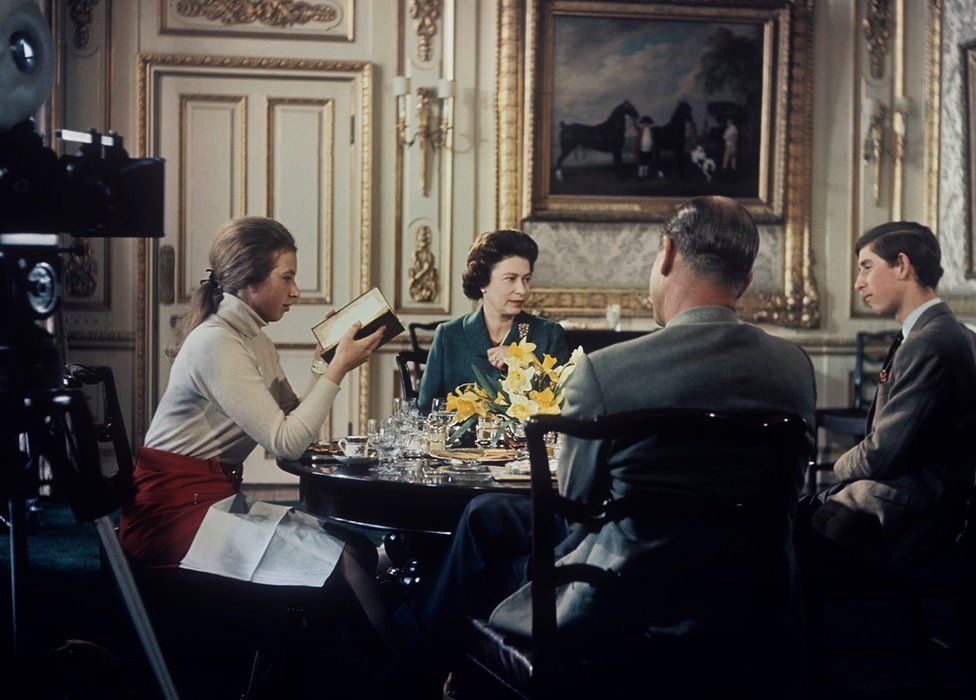
Scene from Royal Family documentary
Image caption, The documentary Royal Family gave an unprecedented look behind the public face of the monarchy
1px transparent line

By the late 1960s, Buckingham Palace had decided that it needed to take a positive step to show the Royal Family in a far less formal and more approachable way.

The result was a ground-breaking documentary, Royal Family. The BBC was allowed to film the Windsors at home. There were pictures of the family at a barbecue, decorating the Christmas tree, taking their children for a drive - all ordinary activities, but never seen before.

Critics claimed that Richard Cawston's film destroyed the mystique of the royals by showing them to be ordinary people, including scenes of the Duke of Edinburgh barbecuing sausages in the grounds at Balmoral.

But the film echoed the more relaxed mood of the times and did much to restore public support for the monarchy.

By 1977, the Silver Jubilee was celebrated with genuine enthusiasm in street parties and in ceremonies across the kingdom. The monarchy seemed secure in the public's affection and much of that was down to the Queen herself.

Two years later, Britain had, in Margaret Thatcher, its first woman prime minister. Relations between the female head of state and female head of government were sometimes said to have been awkward.

One difficult area was the Queen's devotion to the Commonwealth, of which she was head. The Queen knew the leaders of Africa well and was sympathetic to their cause.

She was reported to have found Thatcher's attitude and confrontational style "puzzling", not least over the prime minister's opposition to sanctions against apartheid South Africa.Year by year, the Queen's public duties continued. After the Gulf War in 1991, she went to the United States to become the first British monarch to address a joint session of Congress. President George HW Bush said she had been "freedom's friend for as long as we can remember".

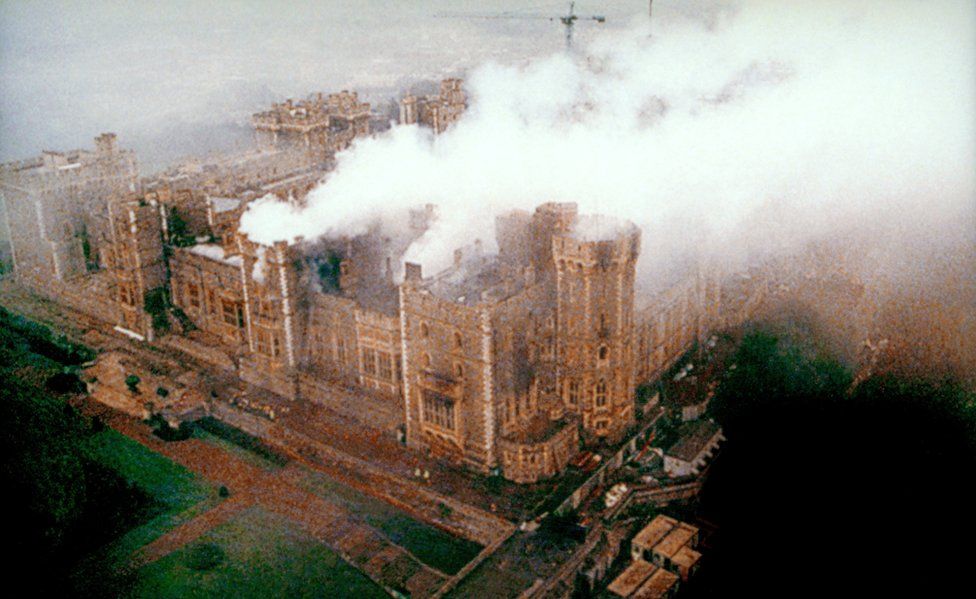
Windsor Castle, the morning after the fire
Image caption, The Windsor Castle fire contributed to the Queen's "annus horribilis"
1px transparent line

However, a year later, a series of scandals and disasters began to affect the Royal Family.

The Queen's second son, the Duke of York, and his wife Sarah separated, while Princess Anne's marriage to Mark Phillips ended in divorce. Then the Prince and Princess of Wales were revealed to be deeply unhappy and eventually split up.

The year culminated in a huge fire at the Queen's favourite residence, Windsor Castle. It seemed a grimly appropriate symbol of a royal house in trouble. It was not helped by a public row over whether the taxpayer, or the Queen, should foot the bill for the repairs.

The Queen described 1992 as her "annus horribilis" and, in a speech in the City of London, appeared to concede the need for a more open monarchy in return for a less hostile media.

"No institution, city, monarchy, whatever, should expect to be free from the scrutiny of those who give it their loyalty and support, not to mention those who don't. But we are all part of the same fabric of our national society and that scrutiny can be just as effective if it is made with a measure of gentleness, good humour and understanding."

The institution of monarchy was very much on the defensive. Buckingham Palace was opened to visitors to raise money to pay for the repairs at Windsor and it was announced that the Queen and the Prince of Wales would pay tax on investment income.

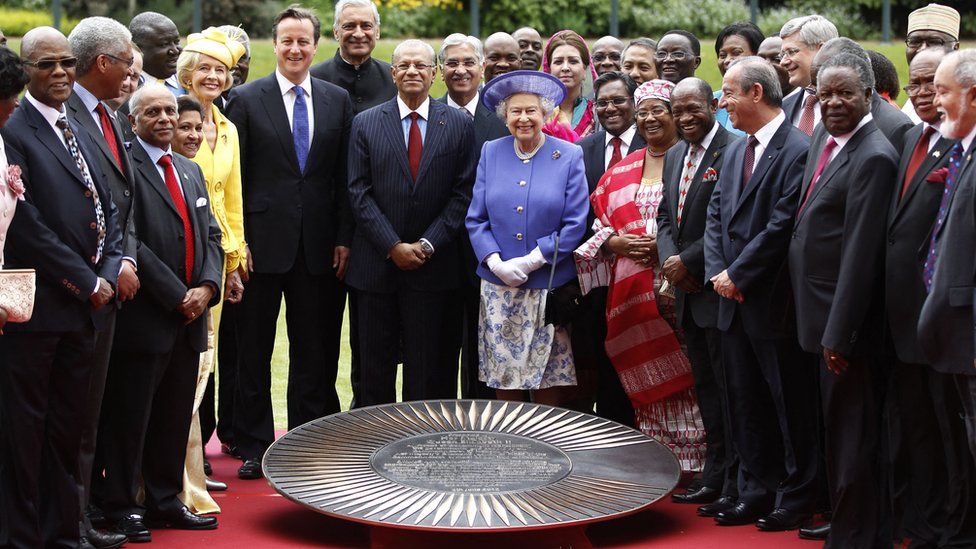
Queen Elizabeth II poses with British Prime Minister David Cameron and heads of government and representatives of Commonwealth nations in London on June 6, 2012
Image caption, The Queen was committed to the Commonwealth throughout her reign
1px transparent line

Abroad, the hopes for the Commonwealth, so high early in her reign, had not been fulfilled. Britain had turned its back on its old partners with new arrangements in Europe.

The Queen still saw value in the Commonwealth and was deeply gratified when South Africa, where she had come of age, at last threw apartheid aside. She celebrated with a visit in March 1995.

At home, the Queen sought to maintain the dignity of the monarchy while public debate continued on whether the institution had any future.

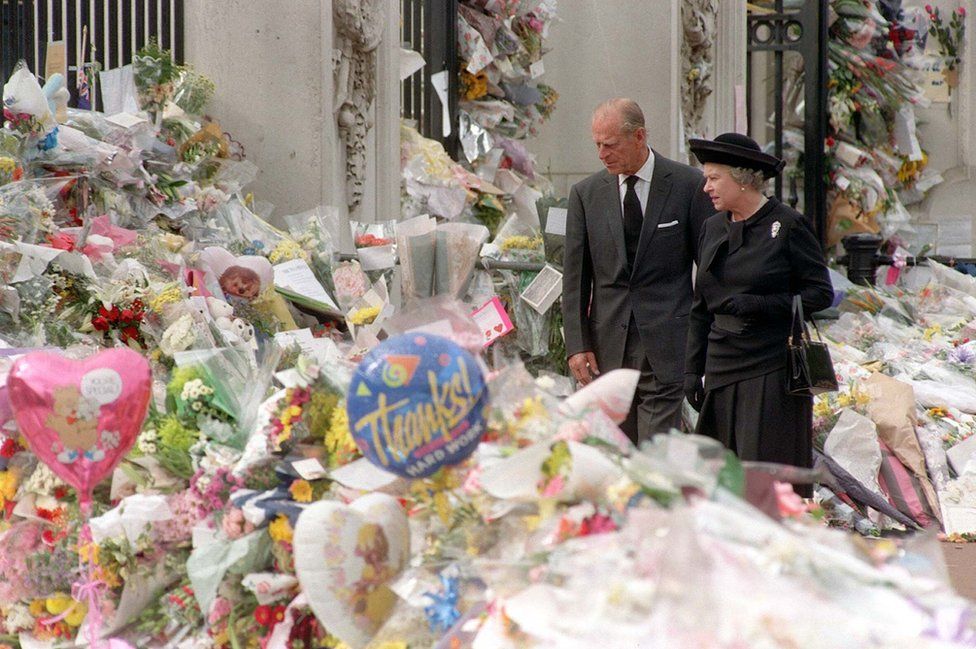
The Queen & Prince Philip view flowers laid to commemorate the death of the Princess of Wales
Image caption, The Queen faced criticism after the death of Diana, Princess of Wales
1px transparent line

As Britain struggled to find a new destiny, she tried to remain a reassuring figure, and with a sudden smile could lighten a solemn moment. The role she valued above all was that of symbol of the nation.

However, the monarchy was shaken and the Queen herself attracted unusual criticism after the death of Diana, Princess of Wales, in a car accident in Paris in August 1997.

As the public crowded around the palaces in London with tributes of flowers, the Queen seemed reluctant to provide the focus that she had always tried to do during great national moments.

Many of her critics failed to understand that she was from a generation that recoiled from the almost hysterical displays of public mourning that typified the aftermath of the princess's death.

She also felt as a caring grandmother that she needed to comfort Diana's sons in the privacy of the family circle.

Eventually, she made a live broadcast, paying tribute to her daughter-in-law and making a commitment that the monarchy would adapt.

The deaths of the Queen Mother and Princess Margaret, in the Queen's Golden Jubilee year, 2002, cast a shadow over nationwide celebrations of her reign.

But despite this, and the recurring debate over the future of the monarchy, a million people crowded into The Mall, in front of Buckingham Palace, on the evening of the jubilee.

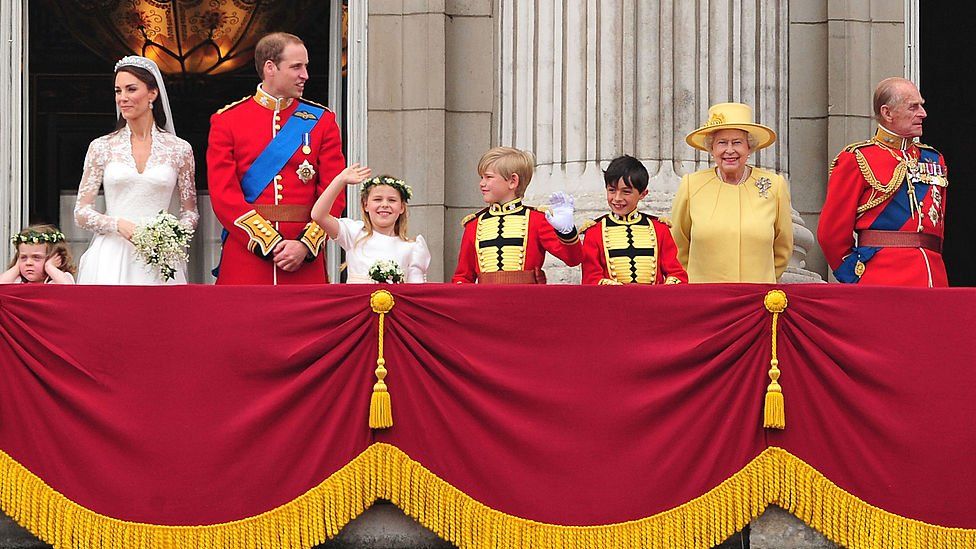
Catherine, Duchess of Cambridge, Prince William, Duke of Cambridge, HRH Queen Elizabeth II and Prince Philip, Duke of Edinburgh on the balcony of Buckingham Palace on April 29, 2011
Image caption, The wedding of Prince William to Catherine Middleton was a happy occasion
1px transparent line

In April 2006, thousands of well-wishers lined the streets of Windsor as the Queen performed an informal walkabout on her 80th birthday.

And in November 2007, she and Prince Philip celebrated 60 years of marriage with a service attended by 2,000 people at Westminster Abbey.

There was yet another happy occasion in April 2011 when the Queen attended the wedding of her grandson, William, Duke of Cambridge, to Catherine Middleton.

In May that year she became the first British monarch to make an official visit to the Irish Republic, an event of great historical significance.

In a speech, which she began in Irish, she called for forbearance and conciliation and referred to "things we wish had been done differently or not at all".

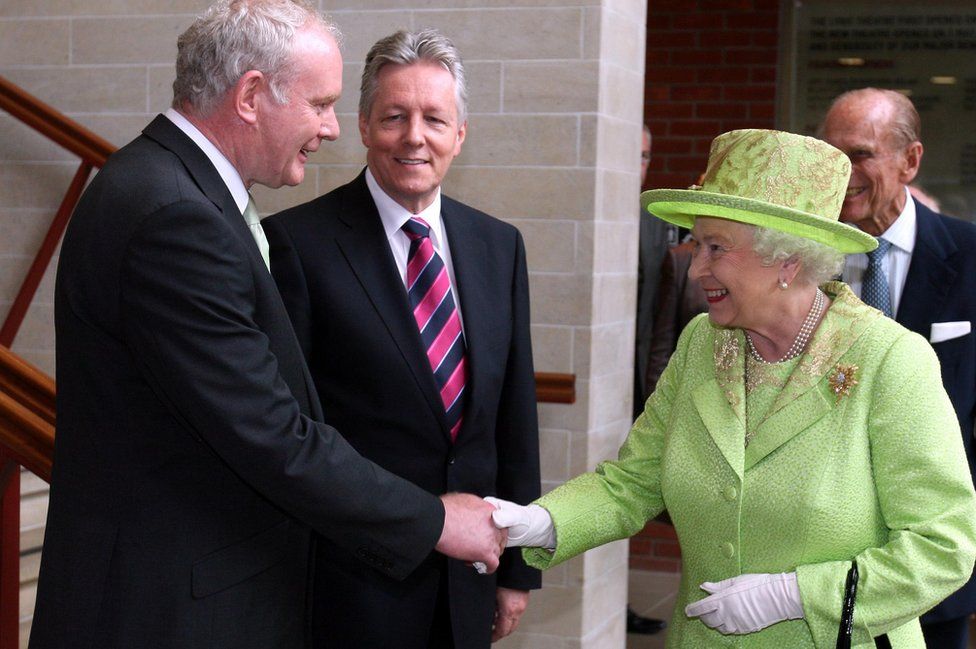
A year later, on a visit to Northern Ireland as part of the Diamond Jubilee celebrations, she shook hands with the former IRA commander Martin McGuinness.

It was a poignant moment for a monarch whose much-loved cousin, Lord Louis Mountbatten, had been killed by an IRA bomb in 1979.

Martin McGuinness shakes hands with the Queen
Image caption, Her handshake with Martin McGuinness was a landmark moment
1px transparent line

The Diamond Jubilee brought hundreds of thousands of people on to the streets and culminated in a weekend of celebrations in London.

The referendum on Scottish independence, in September 2014, was a testing time for the Queen. Few had forgotten her speech to Parliament in 1977 in which she made clear her commitment to a United Kingdom.

"I number kings and queens of England and of Scotland, and princes of Wales among my ancestors and so I can readily understand these aspirations. But I cannot forget that I was crowned Queen of the United Kingdom of Great Britain and Northern Ireland."

In a remark to well-wishers at Balmoral on the eve of the Scottish referendum, which was overheard, she said she hoped people would think very carefully about the future.

Once the result of the vote was known, her public statement underlined the relief she felt that the Union was still intact, although recognising that the political landscape had changed.

"Now, as we move forward, we should remember that despite the range of views that have been expressed, we have in common an enduring love of Scotland, which is one of the things that helps to unite us all."

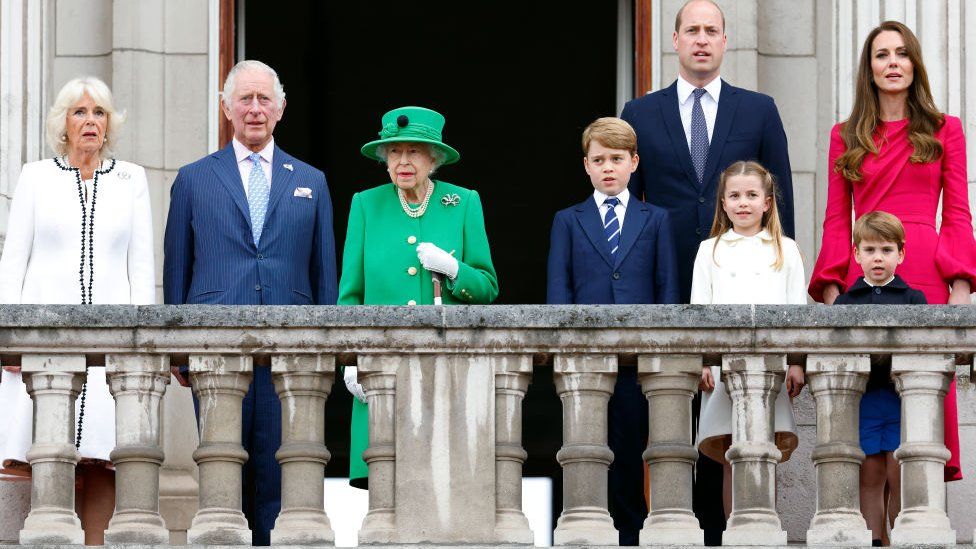
Camilla, Duchess of Cornwall, Prince Charles, Prince of Wales, Queen Elizabeth II, Prince George, Prince William, Duke of Cambridge, Princess Charlotte, Prince Louis, and Catherine, Duchess of Cambridge on the balcony of Buckingham Palace following the Platinum Pageant on June 5, 2022
Image caption, In later years the Queen withdrew from much of public life though she appeared on the balcony at Buckingham Palace for her Platinum Jubilee in 2022
1px transparent line

On 9 September 2015 she became the longest reigning monarch in British history, surpassing the reign of her great-great-grandmother Queen Victoria. In typical style she refused to make any fuss saying the title was "not one to which I have ever aspired".

Less than a year later, in April 2016, she celebrated her 90th birthday.

She continued with her public duties, often alone after the retirement of the Duke of Edinburgh in 2017.

There were continued strains on the family - including her husband's car accident, the Duke of York's ill-judged friendship with convicted American businessman Jeffrey Epstein and Prince Harry's growing disillusionment with life in the royal family.

These were unsettling moments, presided over by a monarch who demonstrated that she was still firmly in control. There was also the death of Prince Philip in April 2021, in the midst of the coronavirus pandemic, and her Platinum Jubilee a year later.

Although the monarchy might not have been as strong at the end of  the Queen's reign as it was at the start, she was determined that it should continue to command a place of affection and respect in the hearts of the British people.

On the occasion of her Silver Jubilee, she recalled the pledge she had made on a visit to South Africa 30 years before.

"When I was 21, I pledged my life to the service of our people and I asked for God's help to make good that vow. Although that vow was made in my salad days, when I was green in judgement, I do not regret, or retract, one word of it." Source: BBC.

Monday, 22 August 2022

FRSC: NEED TO REVIEW DECREE 35

 Special Report by Bisi Bakare 

The  Federal Road Safety Corps Since Inception On February 18,1988, Has Been Blessed with seven crops marshals and chief executives of the establishment comprising three political head and four career officers

 Dr. Olu Agunloye started as director of organization and chief executive in February 18 and finally settled with the present title crops marshal and Chief Executive (COMACE). He served until December 22,1934, 

Major General Anthony Haldu Hananiya was on seat from 1994 to 1998 and again 2003 to 2007. Alhaji Danyaro Yakassai was in between and was made acting Crops Marshal from 1998 to 1999. 

Abba Kyari Wakilbe an Engineer served from 1999 to 2003 as Deputy Crops Marshal during the FRSC/ Police Merger.  Mr Ostia Chidoka then came in from 2003 to 2004; Dr.Boboye Oyeyemi from 2014 to 2022 he handed the mantle to the incumbent Mallam Dauda Biu.

  But a cursory look or review of the administration of each successive head based on newspaper publication is the focus of this write-up and the essence as the need and newspaper publications is the focus of this write-up and the essence as the need and necessity to amend the section of the military-enacted law which established the organization in 1988.

  Successive administration have tried their best to simplify the process of operation of the crops to ensure fairness and equity in decision making only to suit their whims and comprises based on their personal conviction whether each chief executive has worked hard enough or not is better left for history but the real issue is the need to revisit and review decree 45 of 1988 as gazetted on page 819.                                      Section 7 (1) director of the crop states “there shall be a person possessing sound knowledge of ability in the organization  and administration of road traffic and road safety matters, this needs to be reviewed to allow only career officers from within the crop to head it, that should be the most senior officer to ensure fairness continuity and standardization. 

I take cognizance of the corps as an insider, it is not advisable to just bring into the system a politically biased appointee whose aim first is self-interest. Let us examine the tenure of the politically imposed chief executives. 

Agunloye whose action and inaction later consumed him was said to have brought “cultism” into the crops and did not take cognizance of the Nigeria’s National character. 

Almost 80 percent of his work force were from the south. Major Gen. Hlaldu Anthony Hananiya 1996 also enlisted 3000 commanders and marshals and in 1997 recruited 400 commanders and 1600 marshals based on the same yard stick of Olu Agunloye,

 Majority from the Northen part of Nigeria with a view to balance the previous anomalies. Dr. Olu Agunloye was a long time friend of the founding chairman of the corps and capon of the pyrate confraternity which was founded by Prof. Wole Soyinka and others at the University of Ibadan. He was also a honorary Marshal of the Oyo state Road Safety Corps. 

Major General Anthony Haldu Hananiya was a retired army senior officer whose influence commander the respect from his co-military colleagues who were at he corridor of power at the federal level.

Dr Olu Agunloye was accused of insubordination for allegedly aiding the escape of Professor Wole Soyinka from Nigeria during Abacha regime while Hananiya was also removed early in 1999 because he was obliged to implement the directives to effect the decision of the then government that the FRSC been merged with the police. Instead, he was said to have wavered and deliberately obstructed the due implementation of the directive until a court order was produced, aimed at frustrating the government directives. It was seen as in subordination. 

Mr Osita Benjamen Chidoka according to publication on 56th kuti hall anniversary award, university of Ibadan (UI) of 17th july 2010 was said to have, during his leadership of the FRSC, led to the transformation of the corps to functional lead agency in road traffic management and administration in the country by technology. 

This led to visible impact of a 15 percent reduction in facilities from 2007 to 2009. FRSC also won the 2008 prince Michael international road safety award in December 2008 which attracted world bank assistance on safe corridor project and funding . 

All these achievement did not exonerate him from political nepotism and tribalism. At least he donated and sited the FRSC academy to his state and like his political predecessors Ibo language became the lingual franca in the FRSC, he was also alleged to have treated his country people with kids –gloves. All of them were able to get their image enlarged beyond proportion and capacity above reality, just like any Nigerian politician will do.

On the other hand, according to the Daily Sketch of  Thursday, 27th of January 2000, in a merger plans between the FRSC and police which subsequently led to the removal of general Hananiya.

Mallam Yakassai was an insider in the FRSC, a pioneer staff and one who had dutifully served two previous Chief Executives with distinction. AT the time of his appointment Yakassai was the most senior and longest serving officer in the organization? Under Dr. Olu Agunloye, he was Head of Administrator and Secretary to the governing Council. 

He was said to have imitated a revolution in the FRSC at repositioning it for the next millennium by making staff welfare a key priority. He also geared up the FRSC policy of “catch them young” by improving and encouraging the setting up of road safety clubs in schools at the levels.

The relationship which existed between the Police and the Commission was highly improved upon, which resulted in the merger being administratively and maturely handled so that each establishment realized the complementary roles of their assignments by the work forces.

 He was able to get the co-operation of the Police Boss, Muslim Smith, to the advantage of the crops in all direction and operated an open administration to stamp out nepotism and sectionalism which was noticeable since the inception of the Corps.

Engineer Abba Kyari Wakilbe was the Chief Executive from 1999 to 2003. He also chaired the office duting the FRSC/Police merger and was able to maintain the good and cordial relationship between the Police and the FRSC in line with the directive of the federal Might and records of the past administration. 

His approach to issues was subtle, cool and gentle. He ensured equality and fairness during his administration. 

NIGERIAN TRIBUNE of Tuesday 20th of February, 2018 in an article “FRSC DAUNTING TASK IN AFRICA” listed some of the achievements of Dr. Boboye Oyeyemi to include; that the FRSC recorded a commendable 62.4 percent reduction in crash from 40,881 in 1976 to 25,792.

The uniform licensing scheme achieved a “One driver one records” which enabled the FRSC to match records of drivers with their license; vehicle number plate, traffic offences and other all in single view, and the introduction of the toll free 122 emergency number to mention a few.

On July 25th 2022, Dr. Boboye Oyeyemi bowed out of the FRSC and handed the baton of power to Mallam Dauda Biu, a seasoned Chartered Accountant, whose career started at the FRSC Zone RS3 rented HQS, 17 Rabah Road, Malali GRA Office at kaduna, which was the take-off Command of the FRSC in the Northern axis of Nigeria, comprising bauchi, Benue, Gongola, Kaduna, Kano, Katisna, Plateau and Sokoto States.

 The Zone officially known as RS3 had Hajia Bilikisu Yusuf of the New Nigerian Newspapers as the Supervising Council Member, Major Sam Aleno Wyse (rtd) as the Zonal Commander, Mr Bisi Bakare Senior Route. Commander, Head of Operations, Mallam Dauda Biu as Accountant with 60 marshals Comprising of NYSC and old hands of the OYSC members as take-off staff on September 20 1988. 

Later major Sylvester Idakwo (rtd) took over from Major Aleno Wyse.The directive of the federal Government that the outgoing Corps Marshal should hand over power to the most senior serving officer in the hierarchy of the corps was a welcome development but more needs to be done. 

This is because the Military Constitution forced on the Country also contained the clause enabling the President and Commander-In-Chief of Armed Forces to put a political appointee as the Director and Executive of the Corps as against the ethics and what operates in other Paramilitary Forces. 

This abuse was inserted into the Decree 45 which established the Corps by the Babangida Administration to give soft-landing to the first Chief Executive of the Corps. Situation report in 1988 showed that the office was used to victimize and marginalize imagined and real enemies by the political appointee WHO WAS THE Chief Executive at that time with ignominy contrary to lay down rules and regulations. After 35 years of existence the FRSC has come of age with experience and mature officers who can man and run the administration of the crops effectively and lead it to the Promised Land so that the Corps can compete favourably with any of such establishment in the world.

Therefore, the review of this section of the FRSC law is long overdue and should be implemented without delay so that the position of the Corps marshal And Chief Executive should be an internal arrangement based on seniority. 

This action, if implemented would salvage the FRSC from sliding into political uncertainty and gross misconception. It will create a solid standing backbone for career officers who have been insiders from the grassroots and who have made it to the top through sweat and toil rather than a political appointee that sees his appointment as a gift from the political party for a job well-done.

 To this end the new Corps Marshal Mallam Dauda Biu should be confirmed in no distance time so that he could settle down to business and move the Corps forward. It can then be said of him that “Dauda Biu was here, he did his best and put his feet in the sand of time”.

BISI BAKARE EX-PRO OSRSC; EX-PEO FRSC AND PRO LVJ, OYO STATE 2022

Tuesday, 16 August 2022

Egypt church fire: Triplets and twins among 15 children killed


Family photo showing Five-year-old twins Mariam and Barsina Wajih and their three-year-old brother Ibrahim
Image caption, Five-year-old twins Mariam and Barsina Wajih and their three-year-old brother Ibrahim were among the victims

At least 15 children were among the 41 people killed when a fire tore through a Coptic Christian church in Egypt on Sunday.

The Abu Sefein Church, in Giza's working-class Imbaba district, was packed with people celebrating Mass that morning, including children and their parents. Many other children were attending classes or a nursery on the four-storey building's first floor, where investigators believe the blaze started following an electrical short-circuit.

The health ministry said most of the deaths were the result the smoke inhalation, and also a stampede when people rushed to flee the church through a blocked exit.

According to relatives, church officials, a local hospital and Egyptian news outlets, the child victims included five-year-old twin girls Mariam and Barsina Tamir Wajih and their three-year-old brother Ibrahim.

Media caption,

Egypt church fire survivor: 'We saved who we could'

The siblings died along with their mother Irina Atef Ramzi, 34, their grandmother Magda Habib Nabih, 61, and their aunt, Mirna Atef Ramzi, 25.

The singer Miretya Emad, Magda's niece and Irina's cousin, mourned them in posts on her Facebook account.

"With Christ, which is far better. Remember us before the throne of grace," she wrote. "I now have six saints in heaven."

Miretya Emad's family was not the only one to lose three children in the tragedy.

Five-year-old triplets Mohrael, Youssef and Philopator Bassem Amir also were named on a list of victims published by the Imbaba General Hospital.

Photographs taken at a funeral service on Sunday night appeared to showed their mother mourning beside their coffins and holding up three fingers to signify her children.

The mother (centre) of three children killed in a fire at a Coptic Church in Giza mourns during a funeral service at the Church of the Blessed Virgin Mary in Giza, Egypt (14 August 2022)
Image caption, A woman thought to be the mother of Mohrael, Youssef and Philopator Bassem Amir was photographed at a funeral on Sunday night

Also named on the hospital's list of victims are 10-year-old Karolos Aryan, 13-year-old Mina Azmi, and 16-year-old Mina Fakhir.

The Copts United news website said Karolos's mother also died. But his brother Rami survived.

Rami spoke to reporters about his ordeal from his hospital bed on Sunday. He said that the three of them went to Mass together but became separated during the blaze, and that he did not know what happened to them. Rami was reportedly told of their fate by his cousins following the interview.

"I am the one who took them to Heaven," Esnad said, explaining that she had woken them up to go to Mass. "Mina told me to go on Wednesday," she added. "But I refused and told him that he would go today."

The church's priest, Abdul Masih Bakhit, 50, was among the adult victims named by the hospital. His wife was photographed at the funeral service, clutching what appeared to be a charred piece of his clerical vestments.

The wife of Coptic priest Abdul Masih Bakhit holds part of his vestments at a funeral service at the Church of the Blessed Virgin Mary in Giza, Egypt (14 August 2022)
Image caption, The wife of Abdul Masih Bakhit, the church's priest, was also photographed at the funeral  source BBC news 

38 people found stranded on tiny, unnamed island


The group pose for a photo on the islet off the Evros river
Image caption, The group, who identify themselves as Syrians, have now been taken from the islet to Greece

A group of 38 migrants, including a heavily pregnant woman, have been found stranded on a tiny, unnamed island along the Turkish-Greek border.

The 22 men, nine women and seven children say they have been on the Evros river islet since mid-July.

After being located on Monday, they were taken to mainland Greece.

The country's migration minister said the group were all in a "very good condition" and the pregnant woman had been taken to hospital as a precaution.

However, at least one child died on the islet, which is near the Greek town of Lavara, according to the group and human rights agencies. Greek police have yet to confirm this.

There had been some uncertainty over the group's location and therefore over whether Turkey or Greece should have stepped in to help.

Greek authorities initially said the people - who police say all identify themselves as Syrian - were in Turkish territory.

They were eventually found about 4km (2.4 miles) south of the coordinates outside the Greek territory that was initially reported some days ago. This is why, Greek police suggest, the migrants had not been found earlier.

Baida, one of the women in the group, described being treated like "a football game between the two sides" - Turkey and Greece.

"No-one wants us. No-one hears us. No-one wants to help," she added.

Greece's treatment of migrants trying to reach Europe from Turkey has been highlighted for a number of years.

Human rights groups allege thousands of people seeking asylum have been pushed back before being given the chance to apply for asylum. It's also caused rows within the EU after a senior official claimed last year that the country was breaching European fundamental rights.

Some refugees say they have been forcibly returned to Turkish waters.

The Greek government has always denied these claims and insists it complies with European and international law.

This incident on the Evros river "highlights the brutality of pushbacks", said Dimitra Kalogeropoulou, the Greece director of the International Rescue Committee.

Between January and June 2022, 232 Syrians arrived in Greece by sea according to the UN.

A map showing the islet and position near Greek town Lavara
Image caption, The islet is near the Greek town of Lavara